Torino Artscape is Artissima’s column highlighting current exhibitions in the city’s leading contemporary art institutions: a regular feature offering a glimpse into the most compelling exhibition programs, curatorial visions, and artistic expressions that animate Turin’s contemporary art scene. Torino Artscape invites you to explore Turin as an essential destination for art lovers, offering inspiration and cultural enrichment throughout the year.
This new episode is dedicated to the new exhibition of Castello di Rivoli.
Cecilia Vicuña: El glaciar ido (The vanished glacier)

Up to 20.09.2026
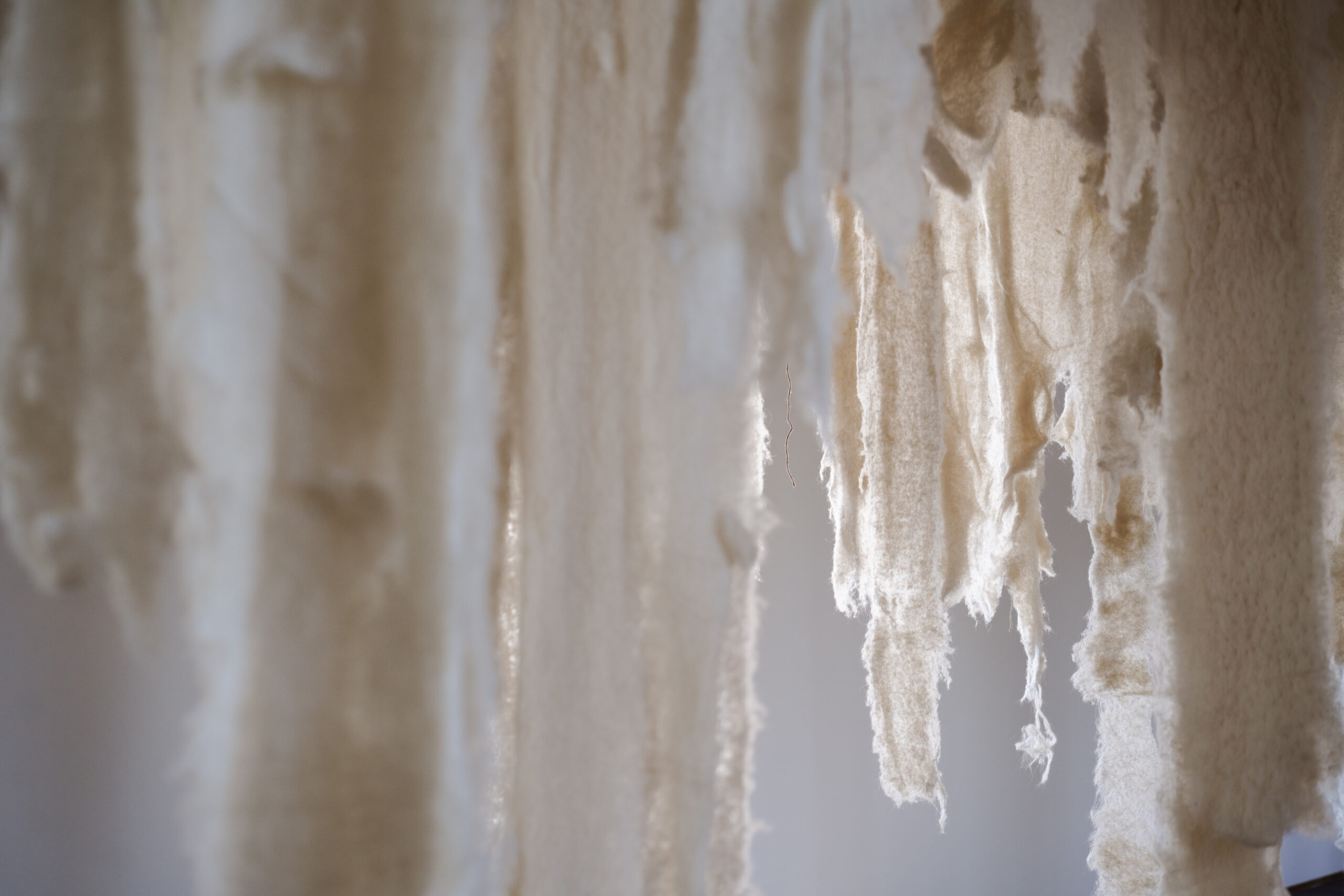
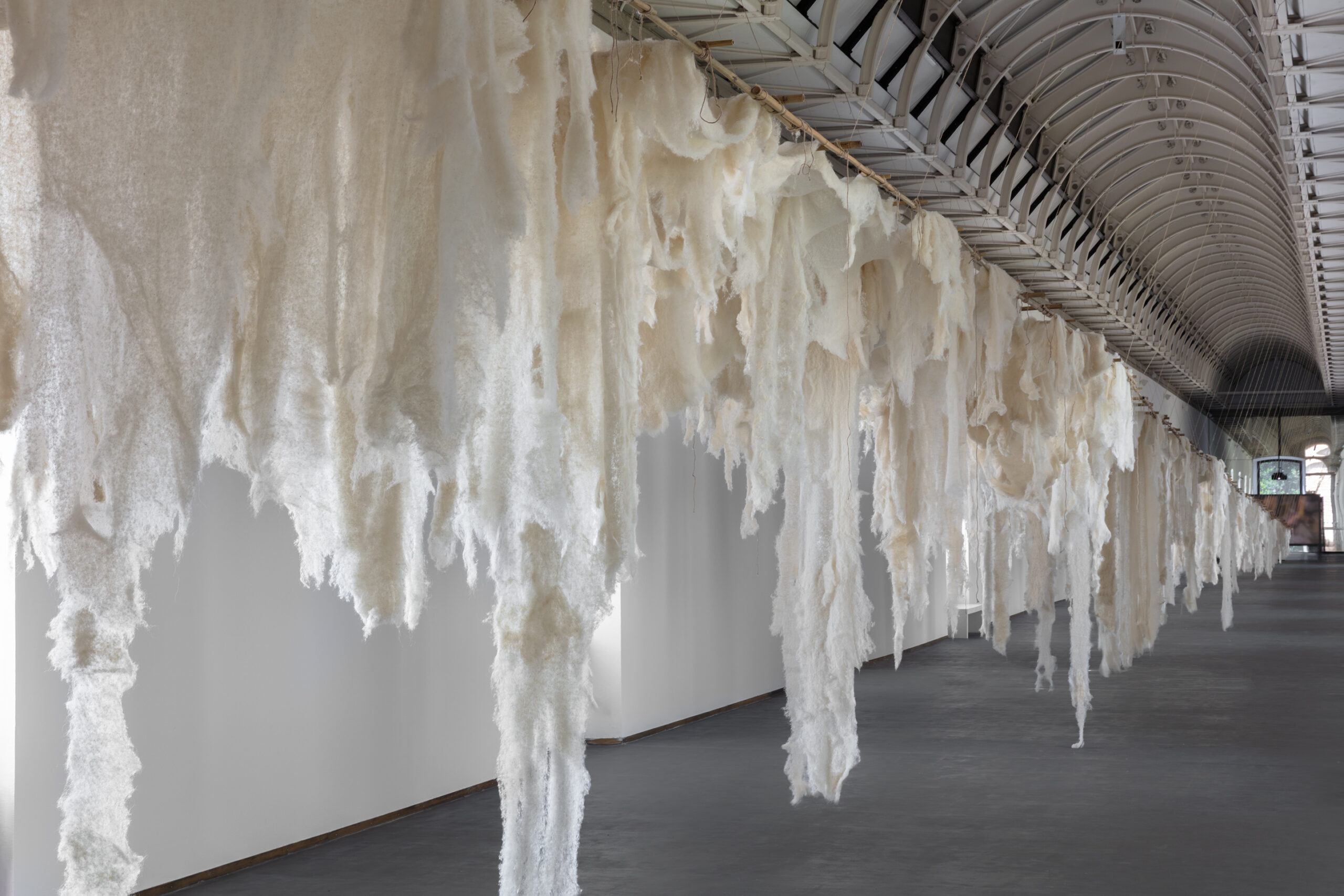
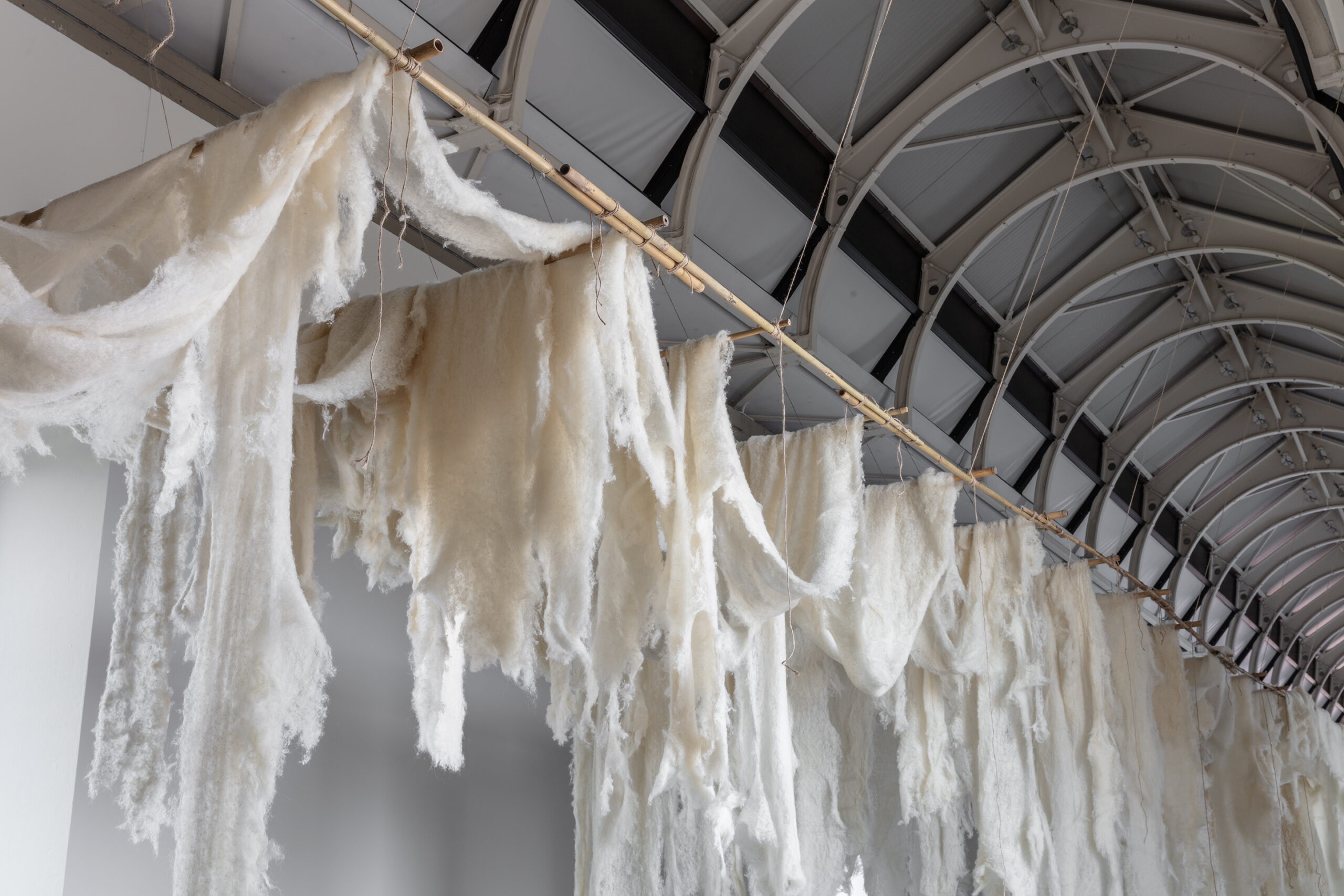
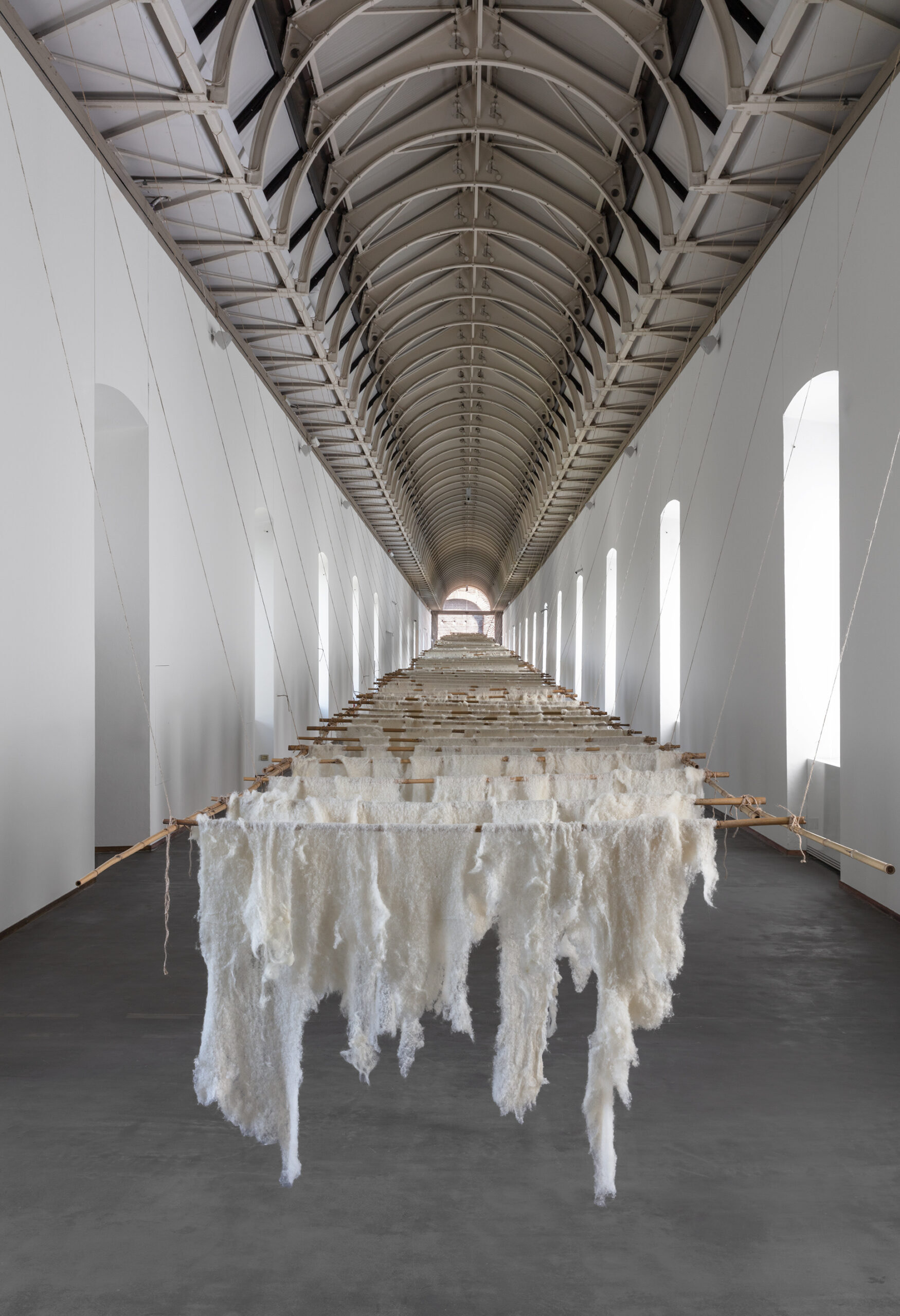
A stretch of raw wool runs through the Manica Lunga of the Castello di Rivoli Museo d’Arte Contemporanea like a constellation of suspended and unstable presences. Frayed threads, fibres that seem to dissolve into the air, and wooden rods hanging at different heights create a silent presence that guides the gaze along the entire nave. The material appears worn down by time, resembling retreating ice or remnants carried away by water. Outside, small fragments collected along the banks of the Dora Riparia and the lakes of Avigliana take shape in an ephemeral installation born from a collective process involving local communities and students from the Accademia Albertina. The work thus presents itself as a fabric of relationships, memory, and attentiveness to the territory.
With Cecilia Vicuña: El glaciar ido, on view until 20 September 2026 and curated by Marcella Beccaria, the Castello di Rivoli Museo d’Arte Contemporanea dedicates to the Chilean artist her first solo exhibition in an Italian museum. Poet, artist, and activist, Cecilia Vicuña has developed since the 1960s a practice that intertwines ecology, politics, and language, giving shape to precarious and participatory works made from minimal materials destined for transformation. For the spaces of the Manica Lunga, she has created a new quipu acostado, a large horizontal installation inspired by the ancient systems of knots used by Andean civilizations to preserve information, stories, and collective memory. Here, however, the knots disappear: what remains is a fragile structure that alludes to loss, to the erosion of memory, and to the progressive disappearance of the glaciers that once dominated the landscape of the Valle di Susa. Vicuña’s intervention evokes the transience of matter, the movement of water, wind, and ice, but also the impact of human presence on the environment. The participatory nature of the quipu therefore becomes essential: the work acts as a device capable of weaving together people, places, and different temporalities. Videos, songs, and poetic verses accompany the exhibition path, expanding the work into a dimension that is at once ritual, political, and deeply collective.
– Text by Guia Agazzi